
Pendleton, OR – Oregon’s schools are facing an attendance crisis, but they’re not standing by quietly. During the 2024-2025 school year, Oregon’s rate of chronic absenteeism – which is defined as students missing 18 days or more over the course of a school year – clocked in at 34%. The implications of missing school are clear: students who are chronically absent are at much greater risk of not learning to read by the end of third grade, not earning enough credits to be considered on-track for graduation by the end of ninth grade, and not gaining the essential skills needed to demonstrate proficiency in math and reading over the course of their educational experience. In addition, chronic absenteeism disproportionately impacts students with disabilities, students of color, and students experiencing economic disadvantage.
Oregon’s schools are mobilizing to reverse the trend, deploying targeted strategies and community partnerships to bring students back to the classroom. They have invested in training, intervention systems, and proactive supports designed to address the barriers that sometimes keep students away – factors that may include housing and food insecurity, family responsibilities, social anxiety and mental health decline, chronic illness, apathy, and feelings of disconnection from schools.
In the Intermountain Education Service District region, administrators, teachers, and support staff have embraced creative solutions to positively impact attendance rates. Educators are reimagining what attendance support can and should look like, employing proactive strategies that include home visits, intentional outreach to families, creative social media campaigns, and positive reinforcement programs that make showing up feel worth celebrating.
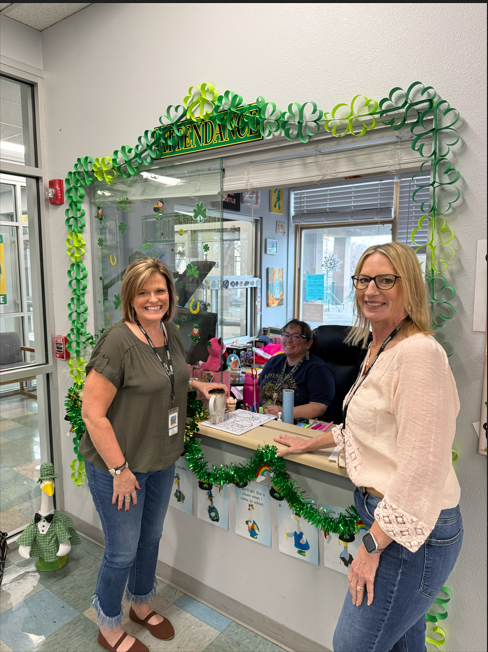
Ronda Smith, IMESD Administrative Coach, and Jenni Galloway, IMESD School Safety and Prevention Specialist, have taken the lead on providing robust attendance support in the 17-district region. In the summer of 2025, for example, Galloway collaborated with area school districts and 6th Judicial Judge Daniel Hill to create a truancy protocol for Umatilla County schools. The truancy protocol, developed in accordance with House Bill 3445, allows parents to be fined up to $500 if their student accumulates eight or more unexcused absences within a 4-week period. Citations are only issued as a last resort after all other interventions are exhausted and staff have worked with families to get students back to school. It’s one prong in a complicated structure of supports that is accessed sparingly.
Smith and Galloway prefer to take a proactive approach to the problem. “Positive school culture is the number one factor that impacts regular attendance,” Smith asserted. “A welcoming and inclusive culture creates an environment where students WANT to come to school.” To this end, the pair provide regular training to schools on the cultivation of culture and connection. They partner with districts to build attendance teams and data tracking systems, helping schools identify and address the root causes of chronic absenteeism. Their work includes educating staff on regular attender data, implementing tiered intervention strategies, and developing incentive programs to boost attendance across key focus areas. Galloway and Smith lead inclusive training that prioritizes warm, welcoming school environments, putting connection with students at the forefront. Their approach is locally responsive, taking into account each district’s unique context.
While the problem is complex, meaningful work is underway across the region to support students and families in the pursuit of regular attendance. Educators are strengthening their efforts to help students feel connected, and administrators are working creatively to remove the practical barriers that keep students from making it through the door.